





A familiar voice on the phone is no longer proof of who is calling. AI voice-cloning and deepfake scams fake emergencies to rush you into paying. Here are the red flags, a simple callback test, and exactly how to report them.
You get a call. It is your child, your parent, or your boss, and the voice is unmistakable. They are in trouble and they need money, right now. Except it is not them — it is a recording of them, stitched together by artificial intelligence from a few seconds of audio. Welcome to the era of the AI voice-cloning scam.
The good news is that voice cloning and deepfakes still leave fingerprints, and a few simple habits defeat most of them. This guide explains how the scams work, the specific red flags to listen for, and the one check that stops the fastest-growing version of the fraud in its tracks.
What Is AI Voice Cloning — and Why It Works
AI voice cloning uses machine learning to reproduce the sound of a specific person’s voice. The U.S. Federal Trade Commission (FTC) has warned that scammers use AI to enhance their “family emergency” schemes, and it notes that voice cloning can be done from a short audio clip — which people hand over every day in voicemails, social videos, and voice notes.
That is the core of the problem: the raw material for the scam is often already public. A few seconds of a loved one speaking can be enough to build a convincing replica.
Deepfakes go a step further and fake video or images as well. In 2023, the National Security Agency (NSA), the FBI, and the Cybersecurity and Infrastructure Security Agency (CISA) jointly released a cybersecurity information sheet on deepfake threats, warning that AI-generated media is increasingly used to impersonate people for fraud and influence operations. The FBI’s Internet Crime Complaint Center (IC3) has also issued public warnings about scammers using AI-generated videos and deepfakes to impersonate officials.
Red Flags of an AI Voice-Cloning Scam
Voice cloning is convincing, but scripts and social engineering are not perfect. Watch for these signals:
- Urgency and secrecy. The caller demands immediate action and tells you not to tell anyone — a classic pressure tactic that stops you from checking.
- An emergency that needs payment right now. A kidnapping, an accident, an arrest, a stranded traveler. The story is built to short-circuit your reasoning.
- A request to pay in an unusual way. The FTC warns that scammers want payment by methods that are hard to reverse — gift cards, wire transfers, and cryptocurrency.
- A number you do not recognise for someone whose real number you have saved.
- Unnatural audio. Flat or robotic tone, missing background noise, odd pauses, or the “voice” not reacting naturally to questions. UNVERIFIED: no single audio artifact reliably proves a clone; treat this as a hint, not proof.
- A voice that sounds slightly “off” to you. Trust the small feeling that something is wrong — familiarity is your advantage.
Remember: a familiar voice is no longer proof of identity. The FTC’s guidance is blunt — verify before you act.
The Callback Test: Your Single Best Defence
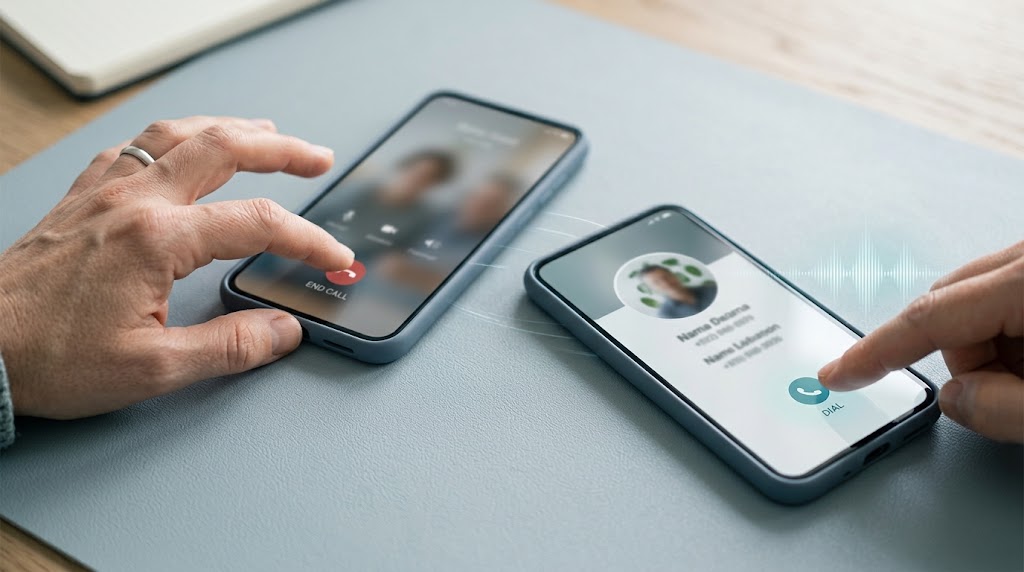
The FTC recommends a simple, powerful habit: hang up and call the person back on a number you know is really theirs.
- Do not react on the call. Stay calm and say you need a moment.
- Hang up. You do not owe a stranger — or a clone — your time.
- Call the person directly using a number already saved in your phone, not the number that just called you.
- Call someone else who can confirm — another family member, or the person’s workplace — if the first number does not connect.
- Do not send money until you have reached the real person on a number you trust.
If it is a genuine emergency, a real loved one will not mind a 30-second check. If it is a scam, that one call exposes it.
Set a Family Safe Word
Voice cloning can copy a voice; it cannot guess a secret word that was never said aloud online. Agree on a private phrase with the people closest to you and use it whenever a call asks for money or urgent action.
- Choose something memorable but not public — not a pet’s name visible on social media.
- Never type it, post it, or say it in a voice note.
- Change it if it ever slips out.
Tightening what you share publicly also shrinks the raw material scammers can harvest. Our guide on how to protect your privacy on social media shows how to lock down the posts and clips that feed voice cloning.

Deepfake Video and Image Scams
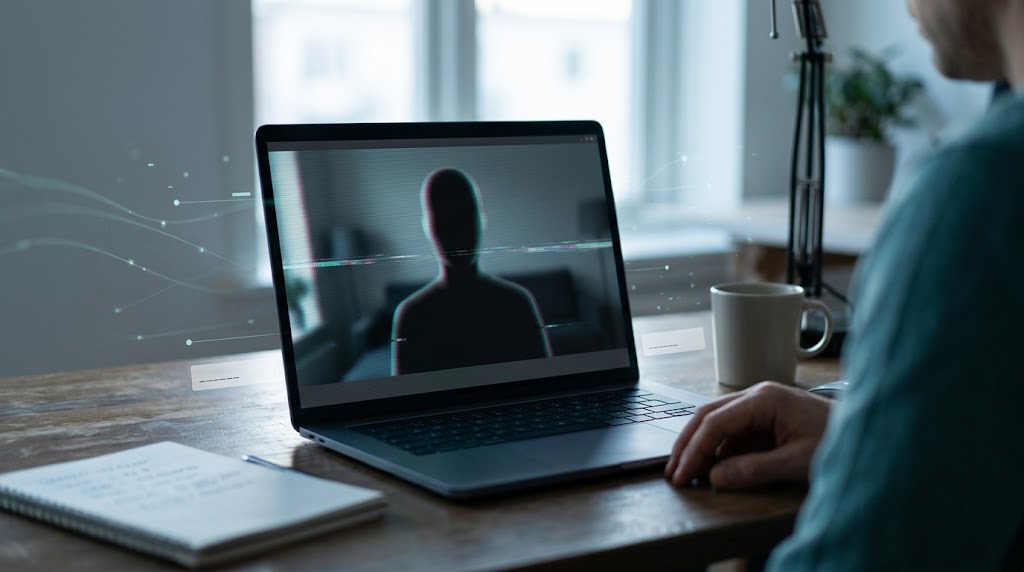
Deepfakes apply the same trick to faces. The NSA/FBI/CISA information sheet highlights that attackers create synthetic video and audio to impersonate people and to add believable “evidence” to a scam. Realistic but fake video is used in fake job interviews, bogus investment pitches, and impersonation of executives.
Use the same rule as with voice: a familiar face on a screen is not proof. Move the conversation to a channel you already trust, ask a question only the real person could answer, and be wary of any live video that seems designed to push you toward a payment.
Why the Scam Targets Emotion, Not Technology
The technology is only half the story. The scam succeeds because it hijacks emotion — love, fear, loyalty — and replaces your verification instinct with panic. Knowing the playbook in advance is your best defence, which is the same reason it pays to recognise a bogus message before you click: see our guide on how to spot a phishing email with real examples.
How to Report It
- Report to the FTC at ReportFraud.ftc.gov — the FTC’s consumer alert directs victims of these schemes here.
- Report to the FBI’s IC3 at ic3.gov if you lost money or the fraud crosses state lines.
- Contact your bank or payment provider immediately if you paid — gift-card, wire, and crypto payments are hard to reverse, but speed still helps.
- Warn your family. Sharing the story protects the next person they call.
A strong password on the email and accounts tied to your money is also part of the defence — if an account is compromised, the attacker can harvest even more material about you. Our guide on checking whether your password was leaked explains how to find and fix exposed logins.
Frequently Asked Questions
How much audio does a scammer need to clone a voice?
The FTC notes that voice cloning can be done from a short audio clip. Even a brief voicemail or a public video can be enough, which is why limiting public voice and video helps.
Can I tell a cloned voice just by listening?
Sometimes, but not reliably. Treat odd tone or pauses as a hint and always verify through a callback on a number you trust rather than relying on your ear.
What should I do first if I get one of these calls?
Hang up and call the person back on a number you already have. Do not send money or share codes before you have confirmed the person is real.
Is a “safe word” actually useful?
Yes. A secret phrase never shared online gives you a question a cloned voice cannot answer, and it costs nothing to set up.
The Bottom Line
AI voice cloning and deepfakes make impersonation cheap and convincing, but the scam still depends on you acting fast without checking. Slow down. Call back on a known number. Use a family safe word. Report what happened. Those four habits beat the technology almost every time.
Protect the accounts behind the scam too — start with locking down your social media privacy settings.